Bio Toys
Mycelium Composite Development for Circular Play Systems
Role: Materials Research and Product Development Lead
Type: Applied Biofabrication Research and Product Engineering
Stack: Compression molding, EN 71 safety testing, biological growth protocols
Partners: Magical Mycelium Company
Overview
Bio Toys is a materials research program developing mycelium-grown composites for toy and playground manufacturing. The project integrated biological cultivation protocols, mechanical testing, and safety certification workflows to demonstrate how fungal networks can produce compliant children's products meeting European safety standards (EN 71-1:2014+A1:2018, EN 71-2:2020) while enabling circular material lifecycles through composting and regeneration.
Working with Magical Mycelium Company, the research established controlled mycelium growth parameters (humidity, temperature, substrate composition), compression molding processes for playground-scale components, and longitudinal durability testing protocols tracking material performance through use and decomposition cycles. The work positions biofabrication not as speculative design but as industrial infrastructure requiring rigorous testing, safety validation, and manufacturing process development.
Growth, decay, and reuse are not side effects of design—they are its grammar.
Problem Space
Plastic dominates toy manufacturing due to technical advantages (moldability, durability, cost) and established supply chains, but creates long-term environmental liabilities through persistence and microplastic generation. Biodegradable alternatives typically sacrifice performance, fail safety standards, or require industrial composting infrastructure unavailable in most markets.
Technical challenge: develop mycelium-based materials matching plastic's functional performance (structural integrity, surface finish, safety compliance) while enabling end-of-life composting in standard conditions. This required optimizing biological growth processes for consistent material properties, developing manufacturing workflows compatible with existing tooling, achieving certification under children's product safety standards, and validating decomposition pathways ensuring safe environmental return.
Existing biofabrication research often prioritized novelty over practical manufacturing constraints. The project needed to bridge laboratory-scale cultivation with production-ready processes, demonstrate regulatory compliance rather than conceptual possibility, and establish cost structures enabling market viability.
Technical Development
Bio Toys implemented structured materials research integrating biological cultivation, mechanical engineering, and safety validation:
Mycelium cultivation protocols:
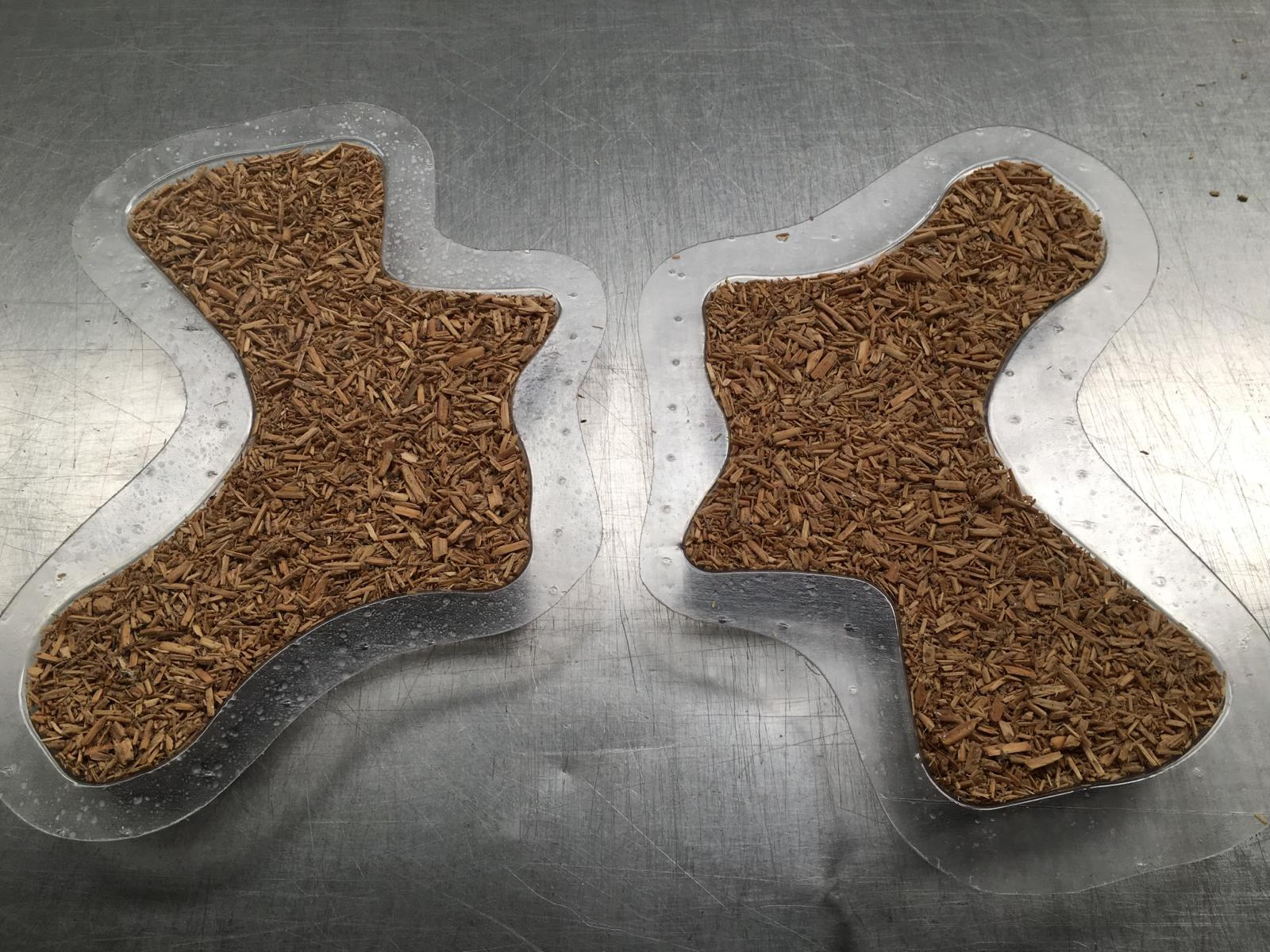
Controlled growth under variable environmental conditions (humidity 60-80%, temperature 20-28°C) to evaluate density, elasticity, and structural uniformity. Substrate composition experiments (agricultural waste, wood chips, hemp fiber) testing how feedstock affects material properties. Growth chamber monitoring (temperature/humidity sensors, time-lapse documentation) tracking mycelium colonization rates and ensuring complete substrate binding before harvest.
Form development and manufacturing:
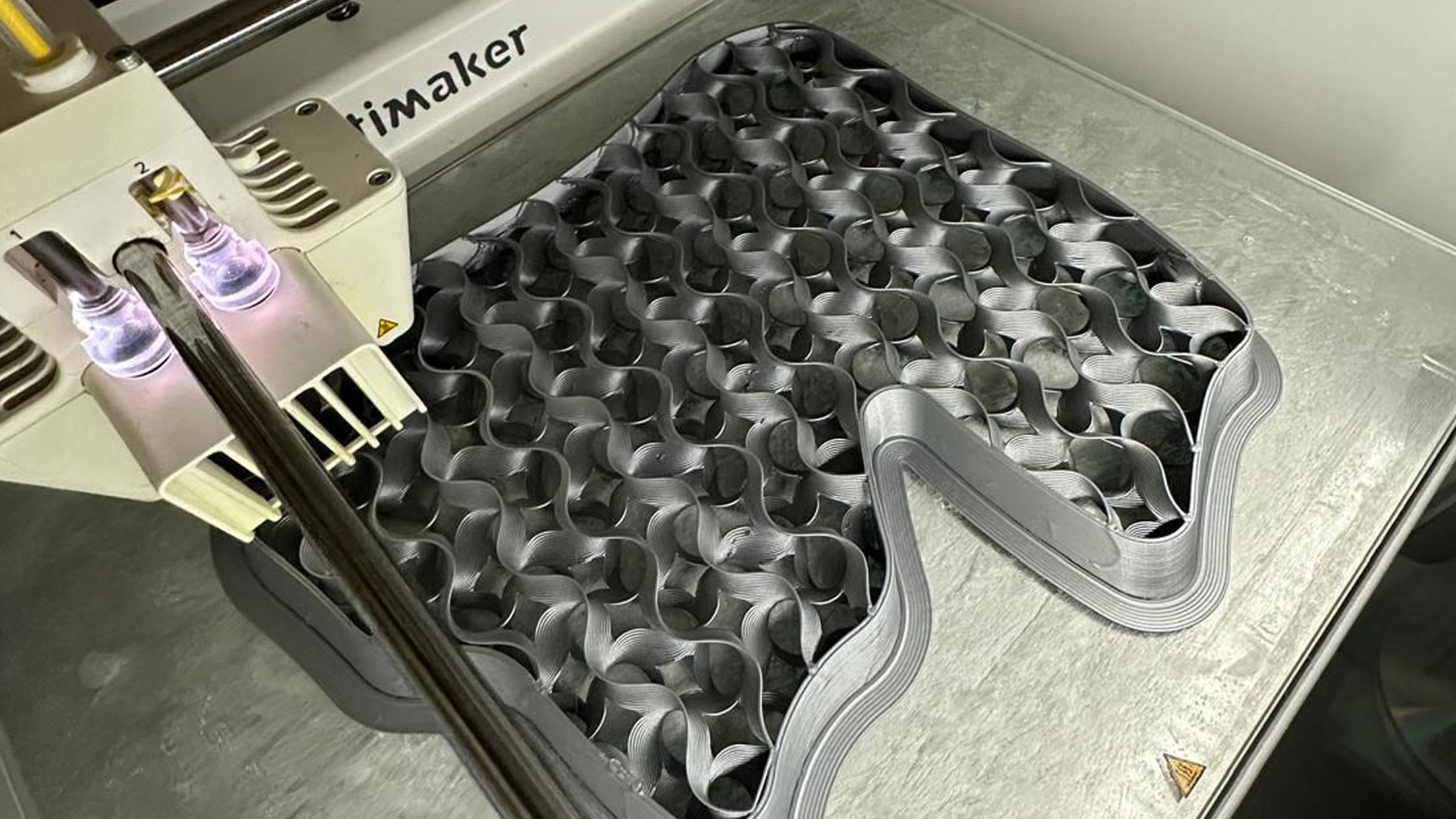
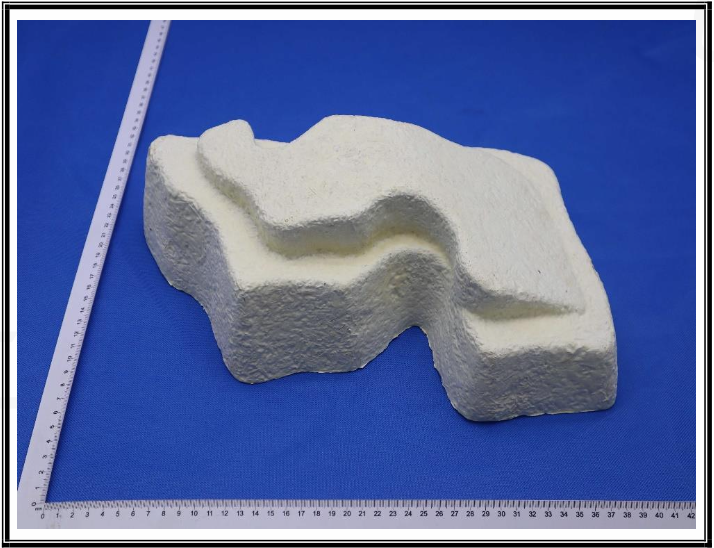
Stepping-stone prototypes (playground components 300-600mm diameter) fabricated via compression molding and air-drying. 3D-printed positives for vacuum forming molds enabling complex geometries. Process optimization balancing growth time (7-14 days), drying requirements (72-96 hours), and material density (0.08-0.15 g/cm³). Manufacturing workflow development enabling repeatable production with consistent quality—critical for regulatory compliance and commercial viability.
Mechanical testing and validation:
Compression testing determining load-bearing capacity for playground applications. Surface hardness measurement (Shore durometer) ensuring child-safe textures. Impact resistance testing (drop tests from 1.5m) validating structural integrity under typical play conditions. Iterative refinement based on test results: adjusting substrate ratios, modifying compression pressures, varying drying conditions to achieve target performance characteristics.
Safety certification (EN 71 compliance):
EN 71-1:2014+A1:2018 (Mechanical and Physical Properties): Testing for sharp edges, small parts, projectile hazards, structural stability. Prototypes passed requirements for children aged 3+, demonstrating mycelium composites can meet rigorous safety standards despite being grown rather than manufactured through conventional processes.
EN 71-2:2020 (Flammability): Testing burn rate, flame spread, afterglow duration. Mycelium's inherent fire resistance (due to dense fungal structure and low volatile content) enabled compliance without chemical flame retardants—significant advantage over conventional biodegradable plastics requiring additives.
Lifecycle and decomposition analysis:
Longitudinal trials tracking erosion, brittleness, and microbial activity through simulated use cycles. Controlled decomposition experiments in soil (90-180 days complete breakdown) and compost (30-60 days) validating end-of-life pathways. Monitoring for harmful residues ensuring safe environmental return—critical for products marketed to families and schools.
Research Methodology
The project treated growth and decay not as failures requiring control but as informational processes within living feedback systems:
Material iteration loop: Cultivation parameters → mechanical testing → performance analysis → parameter adjustment. Each growth cycle generated data informing next iteration. Rather than optimizing single variable, approach recognized coupled parameters (substrate composition affects growth rate affects density affects strength) requiring systematic exploration.
Failure as signal: Non-conforming prototypes (brittle surfaces, inconsistent density, delamination) provided critical learning. Analysis revealed causal relationships: incomplete substrate colonization → weak binding → structural failure. This informed quality control protocols: visual inspection for mycelium coverage, density sampling, pre-testing before full production runs.
Design for decomposition: Unlike conventional product development optimizing only for use-phase performance, methodology incorporated end-of-life behavior as primary design constraint. Materials selected not just for growth characteristics but decomposition profiles. Manufacturing processes designed enabling composting without disassembly—no adhesives, coatings, or composite materials preventing biodegradation.
Regulatory validation as development driver: Safety testing not treated as final gate but integrated throughout development. Early prototype testing revealed specific failure modes (edge crumbling under impact), enabling targeted material improvements. Iterative approach: design → test → analyze → redesign, with each cycle informed by certification requirements.
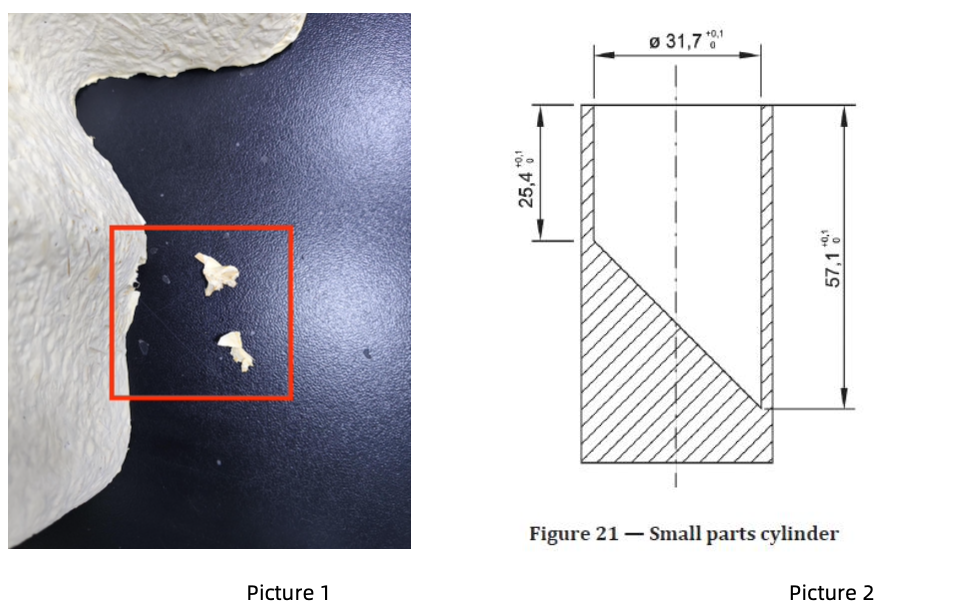
Strengthening the product to make it able to withstand 90N of tension would be required.
Impact
Safety certification: Achieved EN 71-1 and EN 71-2 compliance for mycelium toys, demonstrating biofabricated materials can meet rigorous children's product standards. First known mycelium playground components passing European safety certification—establishing regulatory pathway for broader commercial adoption.
Manufacturing process development: Established production workflows enabling consistent quality at playground scale. Compression molding protocols, quality control procedures, and drying/finishing methods applicable to commercial manufacturing rather than limited to research contexts.
Circular lifecycle validation: Demonstrated complete material loop: agricultural waste substrate → mycelium growth → product use → composting → soil enrichment. 90-180 day decomposition in standard soil conditions without harmful residues—unlike "biodegradable" plastics requiring industrial facilities.
Material performance database: Generated comprehensive dataset on mycelium composite properties (density ranges, compression strength, surface hardness, fire resistance, decomposition rates) under varying growth conditions. Data enables predictive modeling for future product development.
Cost-structure analysis: Quantified material costs (substrate, growth facilities, labor), manufacturing expenses (tooling, processing time), and scaling economics. Demonstrated path to cost-competitiveness with conventional plastics at sufficient production volume, particularly when accounting for end-of-life disposal costs.
Redefining durability: Shifted performance metrics from permanence to participation. Product success measured not by indefinite persistence but by functional lifespan matching use requirements followed by safe environmental return. Material that decomposes responsibly is engineering achievement, not failure.
Stakeholder Context
Research conducted in partnership with Magical Mycelium Company (biological materials expertise), testing laboratories (EN 71 certification), playground equipment manufacturers (application requirements), and early adopter schools/municipalities (field validation).
Process demonstrated practical constraints commercial biofabrication must address: consistency between batches (biological systems vary more than chemical processes), scalability (growth requires time unlike instant molding), regulatory navigation (novel materials face certification uncertainty), and market education (consumers/specifiers unfamiliar with performance characteristics).
Stakeholder feedback shaped development priorities: educators valued decomposition as teaching opportunity (material science, ecology), manufacturers needed reliable production timelines, regulators required extensive documentation demonstrating safety equivalence to conventional materials.
Technical Stack
Biological Systems: Mycelium cultivation, substrate optimization, growth chamber control
Manufacturing: Compression molding, vacuum forming, 3D printing (tooling), air-drying protocols
Testing & Validation: EN 71-1:2014+A1:2018, EN 71-2:2020, mechanical testing, decomposition trials
Process Control: Temperature/humidity monitoring, quality assurance procedures, batch consistency protocols
Documentation: Material property databases, manufacturing workflows, safety certification records
Design Philosophy
Bio Toys reframes material research as systems engineering examining how matter, production, and end-of-life can operate as integrated cycles rather than linear flows. The work positions biofabrication as industrial infrastructure requiring same rigor as conventional manufacturing—testing, certification, process control, quality assurance—not as speculative alternative bypassing established standards.
Mycelium composites function as both material innovation and pedagogical proposition, demonstrating how children's products can participate in circular economies. Every toy becomes temporary node in living material cycle: agricultural waste → fungal growth → play object → soil nutrient. Design challenge shifts from making things last indefinitely to making systems return safely.
The project establishes precedent for regenerative infrastructure where products are grown rather than synthesized, designed for decomposition rather than permanence, and measured by quality of renewal rather than endurance. Playground becomes biotechnical commons where material cycles are visible, legible, and participatory—teaching through embodiment how production can align with ecological limits.
Design is not about making things last; it is about making systems return.